31
Jul

The modern office generates an alarming amount of waste, from discarded electronics to mountains of paper and plastic supplies. As businesses increasingly recognize their environmental responsibility, sustainable procurement practices have moved from optional initiatives to essential strategies. These strategies aren’t just good for the planet; they’ve good for your business’s bottom line as well.
The path to zero-waste office operations begins with understanding and implementing the 5 R’s framework: Refuse, Reduce, Reuse, Repurpose, and Recycle. Here’s how you can achieve more sustainable no-waste product procurement by putting the 5 R’s into practice.
The most impactful step in sustainable procurement is refusing unnecessary items altogether. Before making any purchase, ask critical questions: Do we actually need this product? Can we accomplish our goals without it? Many offices accumulate gadgets, promotional items, and single-use products that serve minimal purposes while creating maximum waste.
You should refuse single-use items like disposable cups, plastic utensils, and individual packaging when reusable alternatives are available. Decline promotional materials at trade shows unless they serve a specific, long-term purpose. Implement approval processes for non-essential purchases to prevent impulse buying and accumulation of unnecessary supplies. When working with vendors, request reusable or returnable containers and ask them to avoid using any unnecessary product packaging.
The second step is to reduce the use of harmful, wasteful, and non-recyclable products you purchase. An example would be choosing concentrated cleaning products that require smaller packaging and reduce shipping impacts.
When you can’t refuse a product entirely, focus on reducing quantities and choosing higher-quality, longer-lasting alternatives. By reducing your use of these products in the first place, you minimize the amount of waste that ends up in landfills.
Also, digitizing your systems plays a crucial role here—transitioning from paper-based processes to digital workflows dramatically reduces paper consumption and storage needs. You can do this by:
Nix throw-away culture and single-use plastics like Styrofoam cups, single-use eating utensils, water bottles, and paper plates and replace them with reusable items (or items that can be composted). Alternatively, before discarding any office item, explore reuse opportunities, like relabeling binders and file folders for new projects.
Another tip? Establish internal sharing systems where departments can exchange supplies they no longer need.
Tackling this can be overwhelming, so start by focusing on one area of your business at a time, like the breakroom. Once you master one area, prioritize reuse for other products in your facility like packaging peanuts, printer cartridges, cardboard boxes, food containers, and rechargeable batteries.
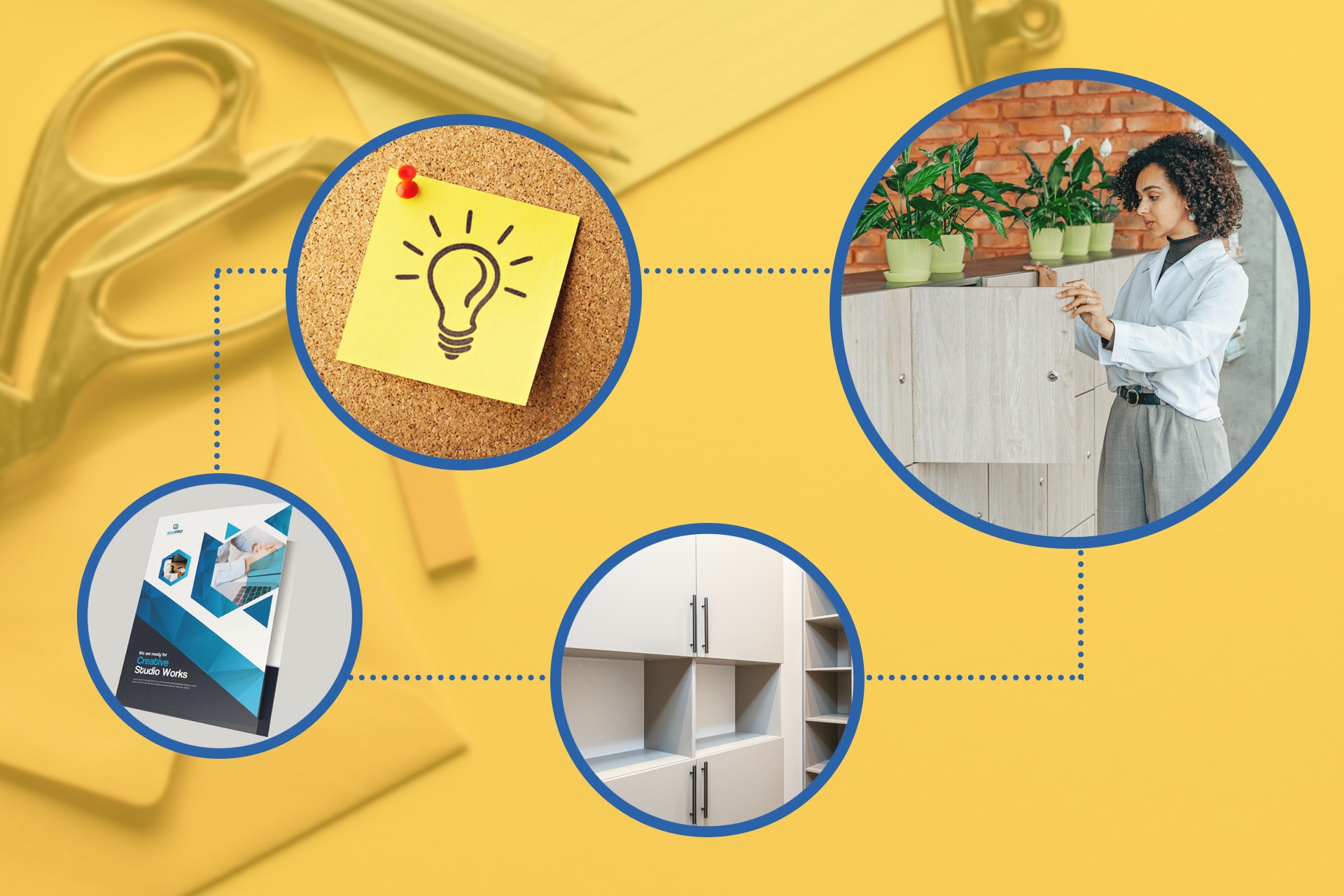
Can’t refuse, reduce, or reuse? Save money while reducing environmental impact by repurposing! This is commonly known as upcycling, and you’d be surprised at how many products can be repurposed with just a little bit of creativity. Cardboard boxes can become storage containers. Broken chairs might provide spare parts for repairs. Outdated promotional materials and wasted printer paper can become scratch paper or craft supplies for team-building activities. Binder clips can be used to organize and hold power cords and chargers in place. A conference table might become individual workstations, or storage cabinets could be reconfigured for different departmental needs.
Also helpful is creating an area of your office as an Upcycle Station, where employees can drop off and check for any necessary supplies before purchasing new ones.
While recycling is often seen as the primary environmental solution, it should be your last resort after exhausting the other four R’s. That’s because the best way to be sustainable is to buy fewer products that can be used more than once (and potentially for other purposes), thereby creating less waste overall. However, when implemented correctly, recycling programs can handle unavoidable waste streams effectively. Separate recyclable office waste into the following – cardboard, mixed paper products, and commingled materials (plastics, aluminum, glass) – and encourage employees to dispose of their waste accordingly.
Companies like HP have pioneered comprehensive recycling programs that exemplify sustainable procurement practices. HP’s ink and toner cartridge return program allows offices to send used cartridges back for refurbishment or proper recycling, creating a closed-loop system that minimizes waste. With Benjamin Office, you can access HP Brand Central, where you’ll find everything from printers and high-yield ink cartridges to post-consumer laptops and AI solutions.
Overstock situations are inevitable, but they don’t have to result in waste. Consider establishing partnerships with local schools, nonprofits, or small businesses that can utilize excess supplies. Many organizations eagerly accept donations of paper, writing instruments, and basic office materials.
Create internal “supply swaps” where different departments can trade excess materials. Marketing might have unused binders that accounting needs, while facilities management could share surplus cleaning supplies with other departments.
Invest in truly sustainable office products. Refillable pens eliminate plastic. Rechargeable batteries reduce hazardous waste. Modular furniture systems can be reconfigured, so you don’t have to replace your furniture as needs in the workplace change.
Choose products made from recycled materials when possible, and prioritize suppliers committed to sustainable packaging practices. Concentrated products, bulk purchasing options, and minimal packaging all contribute to waste reduction goals.
Successful no-waste procurement requires policy changes as well as cultural transformation. Encouraging innovative thinking about resource utilization and training employees on the 5 R’s framework goes a long way in reducing waste. The journey toward zero-waste office operations isn’t about perfection—it’s about continuous improvement and mindful consumption. By implementing the 5 R’s framework and thinking creatively about resource management, offices can significantly reduce their environmental footprint while often discovering cost savings and operational efficiencies. Every small step contributes to a more sustainable future, making the effort worthwhile for businesses, communities, and the planet.
Benjamin Office Supply offers a range of products and services to help you on your road to sustainable no-waste product procurement. We’ve been supplying commercial, educational, government, law, medical, and hospitality customers in the MD, DC, and VA areas for decades. Check out our online store to find the products you need to meet your specific procurement needs.